

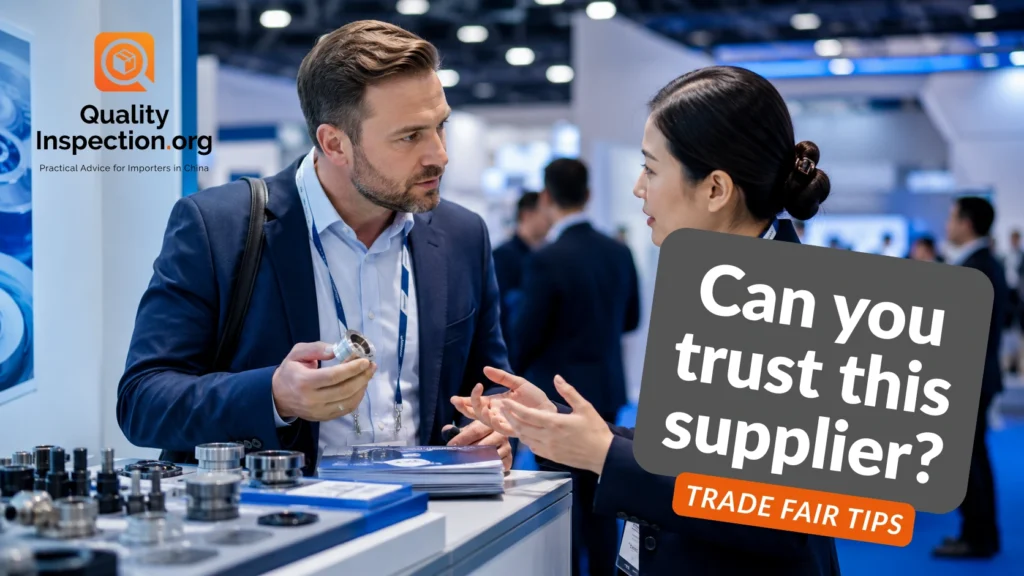
Trade shows can help buyers meet dozens of potential suppliers in only a few days. But a professional booth, polished samples, and confident salespeople do not prove that a company is a capable or reliable manufacturer.
The real value of events such as the Canton Fair and Global Sources comes from knowing what to ask, what to observe, and which suppliers deserve further investigation.
In this episode of China Manufacturing Decoded, Adrian and Renaud explain how buyers can assess suppliers during an initial booth conversation. They cover how to identify possible trading companies, ask about in-house processes, judge production capacity and customer fit, and avoid being treated as an unprepared “tire kicker.”
They also explain why trade show conversations should only be the beginning of the qualification process. Promising suppliers still need background checks, factory visits, and proper due diligence before you place an order.
Listen to the audio here or on Apple Podcasts · Spotify · Amazon Podcasts · Deezer · iHeartRADIO · TuneIn.
Episode Summary
Trade shows remain valuable because they allow buyers to examine physical products, compare many potential suppliers quickly, and ask questions in real time. They are also useful for spotting market trends and emerging technologies. However, products displayed widely at events such as the Canton Fair may also be easily accessible to competitors, so buyers should look for opportunities to differentiate rather than copy what everyone else can see.
Preparation is essential. Buyers should research exhibitors beforehand, arrive with a clear description of what they need, and ask suppliers about their main products, factory location, in-house processes, target markets, customer types, and production capacity. These questions can help reveal whether the exhibitor is a genuine manufacturer or a trading company, whether it controls critical production processes, and whether its size and capabilities are suitable for the buyer’s expected volumes.
Suppliers are also assessing visitors. To avoid being dismissed as a “tire kicker,” buyers should explain their company, market experience, product maturity, and realistic sales forecasts. Exaggerated promises about huge future orders are unlikely to be taken seriously. It is better to discuss credible volumes across the first few years and explain how a smaller initial order could lead to larger business later.
Finally, a professional booth and attractive samples do not prove that a supplier is reliable. Promising conversations should be followed by background checks, factory visits, and more detailed discussions with technical and operational staff before any order is placed.
Further Reading
- How To Get More Out of a China Trade Fair Visit
- How To Find Suppliers in China
- 27 Questions To Ask During a China Factory Visit
- Are Suppliers on Alibaba and Global Sources Trustworthy?
- Sourcing from China 101, Part 2: How to Identify Potential Chinese Suppliers?
Found some possible suppliers? We can help check them:

