

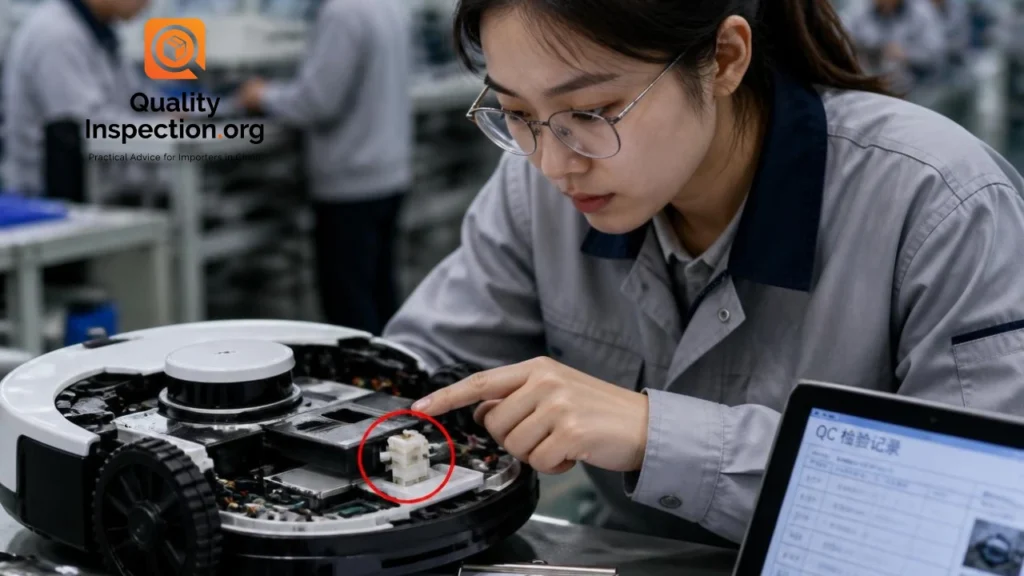
When quality problems keep appearing after production has already started, the instinctive response is often to increase inspections. That may help contain the immediate risk, but it does not explain why the problems are occurring or prevent them from returning.
The first step is to determine whether the failure comes from the product design, the materials and components, or the manufacturing process itself. Buyers also need to distinguish between understandable issues during early production and repeated mistakes that reveal a supplier has weak controls, poor documentation, or no effective quality system.
In this episode of China Manufacturing Decoded, Adrian and Renaud explain how to investigate recurring production problems, what evidence a supplier should provide after claiming an issue has been fixed, and when transferring production may be the safest option.
Listen to the audio here or on Apple Podcasts · Spotify · Amazon Podcasts · Deezer · iHeartRADIO · TuneIn.
Episode Summary
- 00:00:59 – What to do when production problems keep appearing
A listener asks how companies should respond when manufacturing has already started, but each shipment continues to reveal new quality problems. - 00:02:14 – Is it a design problem or a manufacturing problem?
The first step is to identify where the failure originates. Products that cannot withstand normal use may have design or component-selection problems, while units that arrive damaged or dead on arrival are more likely to indicate workmanship or manufacturing failures. - 00:04:40 – Validate new products before scaling production
Innovative products should be tested with representative users before a large launch. Reliability testing can simulate expected use, but real-world pilot batches may reveal behaviours, environments, and failure modes that the development team did not anticipate. - 00:07:00 – Why problems appear during early production
Issues during the first production runs may indicate that the product did not undergo sufficient pilot builds, troubleshooting, verification, or process qualification before mass production began. - 00:08:29 – When repeated factory mistakes become a serious warning sign
Occasional production problems can happen. However, repeated basic mistakes after a product has been manufactured for some time suggest that the supplier lacks effective systems, checks, and controls. A capable factory should detect material, component, machine-setting, and workmanship problems close to their source before they reach the finished product or the customer. - 00:10:15 – Can supplier audits reduce this risk?
A quality system audit or initial factory evaluation can reveal whether a potential manufacturer has basic controls, records, and processes in place.
Buyers must also understand what type of supplier they are working with. Some manufacturers can manage product industrialization and production ramp-up, while others expect the customer to provide detailed technical and project management guidance. - 00:12:38 – What evidence proves that a problem has been fixed?
A supplier’s promise that “it will be better next time” is not enough.
The supplier should investigate the problem, identify its root cause, contain any affected materials or products, implement corrective actions, and validate that the solution works without creating unintended consequences. - 00:15:38 – Using fixtures to improve consistency
If a manual operation is producing inconsistent results, a fixture or jig may make the task easier and more repeatable.
The supplier should provide evidence that the fixture exists, demonstrate how it is used, update the relevant work instructions, and confirm that the new process has been validated. - 00:16:13 – Make processes easier, better, faster, and cheaper
Process improvements should first make the task easier for the operator. Easier operations are usually performed more consistently, often become faster, and may ultimately reduce labour and quality costs. - 00:19:09 – Corrective action versus more inspections
Some inspection is necessary because defects must be detected before corrective action can begin. Additional inspections may also be needed temporarily when a serious problem appears.
However, buyers often focus on inspecting finished products without investing enough effort in improving the process that created the defects. - 00:21:37 – When inspections become supplier babysitting
If inspectors check everything indefinitely, the manufacturer may begin relying on the buyer’s inspection team to determine whether production is acceptable.
This removes responsibility from the supplier and discourages them from developing their own effective quality system. - 00:22:02 – Containment and corrective action must run together
Extra inspections can act as a temporary filter while the supplier investigates and removes the root cause.
The buyer may manage the inspection and containment side, while the supplier works on the corrective action. Both activities should continue until there is reasonable evidence that the problem will not return. - 00:23:12 – Common factory weaknesses to investigate
Recurring problems often come back to a relatively short list of weaknesses:
1. Poor incoming material and component controls
2. No formal first-article approval
3. Inadequate checks during production
4. Unclear work instructions
5. Poor understanding of likely defects and critical characteristics
6. Insufficient mistake-proofing
7. Inadequate use of fixtures, jigs, and tooling
Blaming an individual operator is not a root-cause analysis. The real question is why an untrained or unsupervised operator was allowed to perform an uncontrolled process on the product.
The Main Lesson
Production problems do not automatically mean that a supplier is incapable. New products and early production runs can reveal issues that were not identified during development or pilot manufacturing.
The critical distinction is how the supplier responds.
A capable manufacturer should be able to detect problems close to their source, produce inspection and process records, investigate root causes, implement corrective actions, update working documents, and demonstrate that the solution has been validated.
More inspections may reduce the immediate risk of defective products reaching customers, but inspection alone does not improve the manufacturing process. Used for too long, it can encourage the supplier to depend on the buyer to manage quality for them.
Buyers should therefore use inspection for short-term containment while ensuring that the supplier works on permanent process improvement. If repeated basic mistakes continue, records are unavailable, production is moved between facilities without approval, or the supplier cannot demonstrate effective corrective action, transferring production may be the safest option.
Further Reading
- When and Why a Product Failure Analysis is Required
- QC During NPI: Build Quality In Before Mass Production
- Corrective Actions and Preventive Actions (CAPA) Guide
- Production Transfer: A Roadmap (Assembly Operations Only)
- Use a Corrective Action Plan After a Failed Inspection
- Supplier Quality Management: KPIs and Improvement Tools

