

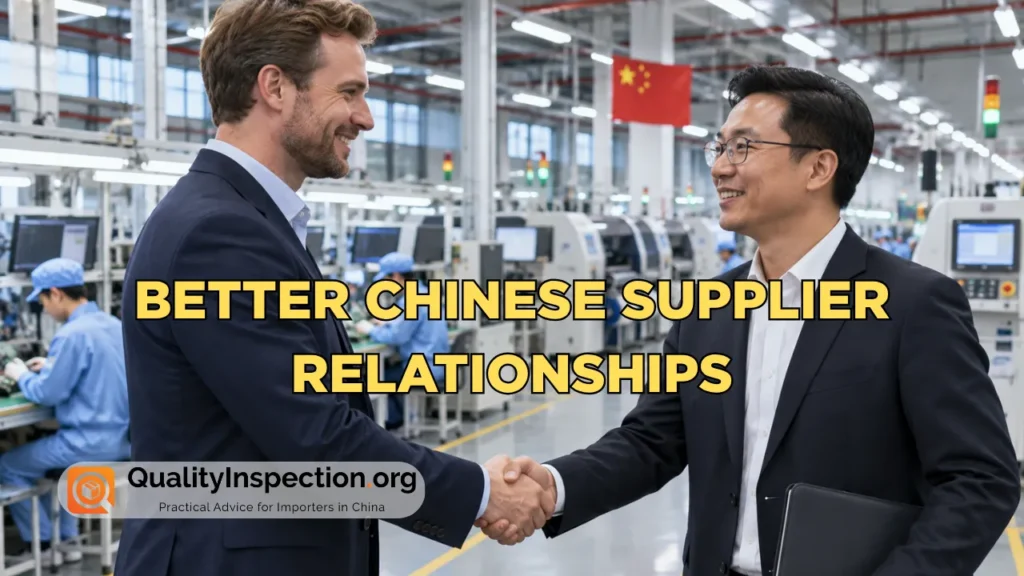
A good relationship with your Chinese manufacturer can make a significant difference when production problems arise. Suppliers may be more willing to accommodate urgent requests, communicate openly about problems, and give your orders additional attention.
However, building that relationship takes more than a friendly factory visit or negotiating a good price. It requires trust, reasonable expectations, and an understanding of how your supplier approaches business.
Join us today as we revisit a classic 2022 discussion about building better relationships with Chinese manufacturers. They explore cultural considerations, practical communication techniques, and how importers can become customers that factories genuinely value.
Listen to the audio here or on Apple Podcasts, Spotify, Amazon Music, and other podcast platforms.
Episode Sections
Here’s a summary of the main topics discussed, but listen to the episode for the complete explanations and examples.
Why does your relationship with a Chinese supplier matter?
When sourcing products from China, importers naturally concentrate on pricing, quality requirements, and delivery schedules. However, the relationship they develop with their manufacturer can also influence how smoothly things run.
We describe three situations a customer might find themselves in.
- Where the supplier barely knows the customer. Communication is mostly transactional, and the manufacturer has little personal connection with the buyer.
- Where the supplier knows and respects the customer, understands their expectations, and values the business relationship.
- Where the supplier knows the customer but considers them difficult or unreasonable.
These distinctions become especially important when problems arise.
How do trust, reciprocity, and the concept of ‘face’ affect supplier relationships?
Doing business in China can involve cultural expectations that are unfamiliar to overseas buyers.
There are three particularly important concepts: reciprocity, circles of trust, and saving face.
Reciprocity concerns the expectation that favours and concessions should work both ways.
For example, if a manufacturer agrees to a lower price, they may subsequently expect greater flexibility from the customer in another area. This can create misunderstandings when the buyer considers certain requirements, particularly product quality and safety, non-negotiable.
What makes an importer a good customer in the eyes of a Chinese manufacturer?
Many importers expect their manufacturers to deliver competitive prices, consistent quality, and reliable service.
However, we encourage buyers to consider what their suppliers want from the relationship.
A good customer is generally someone who provides commercially worthwhile business, behaves reasonably, and offers the prospect of a sustainable long-term relationship.
For example, a manufacturer may value customers who communicate their requirements clearly, pay attention to agreed processes, and avoid unnecessary changes or threats.
The supplier also needs to make a reasonable profit.
… and more, please listen to the episode in full.
The Last Word…
Building productive relationships with Chinese manufacturers is an important part of managing an outsourced supply chain.
A good relationship can encourage faster communication, greater cooperation, and more willingness to help when production problems occur.
However, buyers should not confuse a friendly relationship with a guarantee of reliable manufacturing performance.
The broader lessons from this discussion apply to almost any importer working with overseas suppliers:
1. A productive supplier relationship needs to work both ways.
Manufacturers are more likely to value customers who behave fairly, communicate clearly, and recognise that the supplier also needs a commercially sustainable relationship. Reciprocity is important, but it should never require compromising essential quality or safety standards.
2. Understanding cultural differences can help avoid unnecessary conflict.
Concepts such as trust, reciprocity, and saving face can influence business relationships in China. Importers should be respectful and avoid public criticism, while remaining direct about requirements and problems.
3. Regular, structured communication is essential.
Factory visits, video calls, clear written instructions, and systematic follow-up can strengthen relationships and reduce misunderstandings. Important requirements should be documented, explained, and confirmed before problems arise.
4. Good relationships should encourage transparency, not replace quality controls.
Suppliers need to feel comfortable reporting production delays, defects, and other difficulties promptly. However, importers must still maintain clear specifications, agreed responsibilities, inspections, and effective quality management processes.
Ultimately, the aim is not simply to become friends with your manufacturer. It is to develop a professional relationship built on mutual respect, clear expectations, and a shared commitment to resolving problems effectively.
Further Reading
- Sourcing from China 101: Build Good Rapport With Suppliers – More detailed guidance on strengthening relationships with manufacturers.
- Can You Be Too Trusting With Your Chinese Factory? – Why close relationships should not replace proper business safeguards.
- How to Behave in a Chinese Factory – Practical advice on addressing problems while maintaining respect.
- 9 Key Quality Management Challenges in China – Common obstacles importers encounter when managing outsourced production.

