

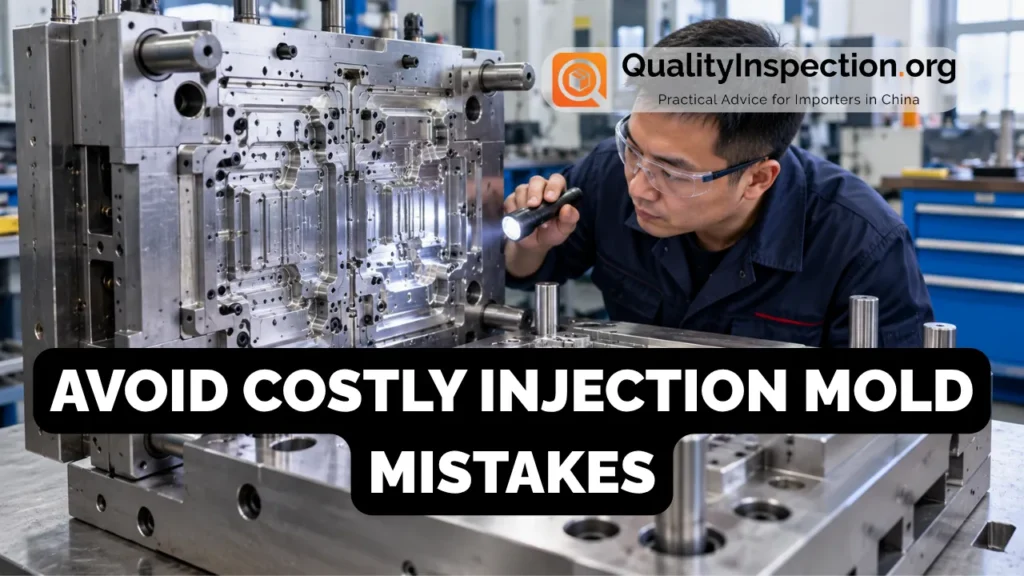
You’ve spent months developing a new product. The prototypes look good, the design seems ready, and you’re preparing to invest thousands of dollars in its tooling. But this is also where some very expensive plastic injection mold tooling mistakes can happen.
What if the first molded parts don’t meet your expectations? What if your supplier subcontracts the tooling without telling you? Or what happens when you try to move production and discover that the factory refuses to release a mold you’ve already paid for?
In this Gold episode of China Manufacturing Decoded (Ep. 351), we revisit a discussion from April 2021 between Sofeast CEO Renaud Anjoran and experienced product designer Andy Bartlett. They explore seven common mistakes businesses make when developing, approving, and maintaining plastic injection molds, particularly when working with manufacturers in China.
The lessons remain relevant for importers, hardware startups, and established companies preparing to manufacture plastic parts.
Listen to the audio here or on Apple Podcasts, Spotify, Amazon Music, and other podcast platforms.
Episode Sections
Here’s a summary of the main topics discussed, but listen to the episode for the complete explanations and examples.
Why a good prototype doesn’t mean you’re ready for tooling
A successful 3D-printed or CNC-machined prototype doesn’t prove you can manufacture a product economically and reliably with injection molding.
Renaud and Andy explain why companies need to review the design for manufacturing (DFM) before committing to tooling fabrication.
They discuss common issues involving draft angles, thin walls, radii, gate locations, cooling, and part ejection. These details influence the quality and appearance of the finished product and may require changes to the original design.
Don’t assume the first tooling trial will be successful
Even when tooling has been designed carefully, the first molded samples commonly reveal issues that need attention.
Andy emphasizes that tooling verification is an iterative process. Buyers need to allow enough time for initial trials, inspection, modifications, and further testing before approving the mold for mass production.
He also recommends setting aside an additional 10–15% of the tooling budget for possible changes requested during development.
A supplier promising very fast tooling fabrication may not be accounting for the entire development and approval process.
Choosing tooling suppliers based on price can be expensive
Two suppliers quoting for apparently identical injection molds may be proposing very different solutions.
The type of steel, expected mold life, construction methods, engineering capabilities, and quality expectations all influence the real cost.
Renaud explains why buyers should be cautious about choosing the cheapest supplier simply because the quote looks attractive and communication seems straightforward.
A low initial price can lead to expensive problems if the tooling doesn’t meet production requirements.
Who actually owns your injection mold?
Paying for tooling doesn’t necessarily mean your supplier will willingly release it when you want to change manufacturers.
Disputes can arise over ownership of the physical mold, the tooling design, or engineering work that the supplier claims was not included in the original price.
Renaud shares examples of buyers discovering that their supplier considers some of the tooling intellectual property to be its own.
Andy recommends making ownership arrangements clear at the purchase order stage, before tooling fabrication begins.
The hidden risks of subcontracted tooling
Your injection molding supplier may tell you it manufactures tooling, but that doesn’t always mean the work takes place in its own factory.
Some suppliers outsource tooling design or fabrication to separate workshops, potentially creating additional layers of communication and reducing transparency.
This raises questions about who controls the tooling drawings, who is responsible for modifications, and whether intellectual property is adequately protected.
The discussion also covers why visiting the actual toolmaker, checking its facilities, and understanding its relationship with the production factory can help buyers reduce risk.
… and more, please listen to the episode in full.
The Last Word…
Plastic injection mold tooling is more than a one-time engineering expense. It’s a long-term investment that can determine whether your product can be manufactured consistently, at the expected quality, and at a commercially viable cost.
For buyers, the most important lesson is to address tooling risks before committing substantial funds.
That means completing appropriate DFM reviews, selecting capable suppliers, allowing realistic time for tooling trials, confirming ownership rights, and establishing clear expectations for maintenance and service life.
A little more preparation before cutting steel can prevent far more expensive plastic injection mold tooling mistakes later.
Further Reading
- Why Injection Mold Tooling Often Takes Longer Than You Were Quoted — Further reading on tooling lead times and development risks.
- When to Sign Off on Injection Mold Tooling: From DFM to T0–T2 — Understanding tooling trials and approval.
- Injection Mold Tooling Roadmap: From DFM to T1 Samples — A practical overview of the tooling development process.
- How to Minimize the Risk of Needing Tooling Revisions — Reducing costly changes during tooling development.

