

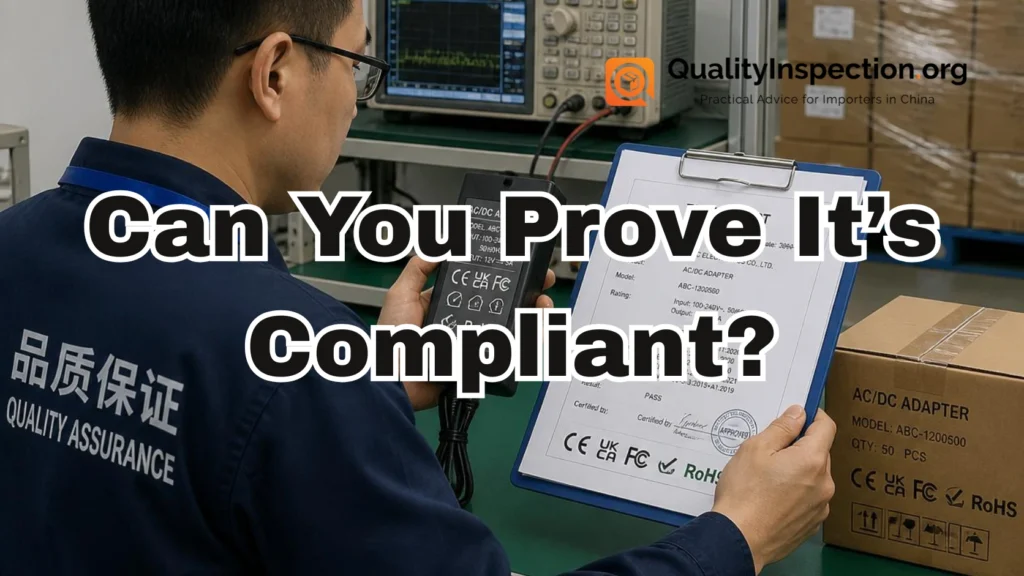
A supplier may tell you that a product is CE compliant, provide a test report, or point to similar products they have manufactured before. But none of those things automatically proves that the exact product you are placing on the market meets every applicable requirement.
For importers and brand owners, product compliance needs to be treated much like product quality: it should be defined, checked, documented, and verified rather than assumed.
In this episode of the China Manufacturing Decoded podcast, Adrian speaks with Lee Bryan, founder and CEO of Arcus Compliance, about the practical steps companies should take when developing and manufacturing products in China for the UK and EU.
They discuss why regulatory enforcement is becoming more automated, how early compliance planning can prevent costly problems later, where AI can help with regulatory research, why supplier certificates and test reports need independent verification, how product changes can trigger reassessment, and why strong compliance systems can ultimately become a competitive advantage.
Listen to the audio here or on Apple Podcasts · Spotify · Amazon Podcasts · Deezer · iHeartRADIO · TuneIn.
What do we discuss?
- Why product compliance needs to start before mass production
Compliance should not be something that is checked only after the product has been manufactured or launched. Companies need to understand the regulations and requirements that apply while the product is still being developed, so testing, documentation, and any necessary design changes can be addressed before tooling and production are committed. - Why regulatory enforcement is becoming harder to ignore
Lee explains how enforcement is changing as regulators increasingly use automated tools, web scrapers, and other digital systems to monitor products being sold online. This allows authorities to review far more products than traditional inspection methods could manage, increasing the likelihood that compliance problems will be identified. - Why you should not simply accept a supplier’s compliance claims
A Chinese manufacturer may say that a product is CE compliant, provide test reports, or point to products it has manufactured previously. Importers still need to carry out their own due diligence. The documentation should apply to the actual product being purchased, and test reports and certificates should be checked rather than simply filed away. - Verify certificates and the testing behind them
Lee recommends confirming that testing has been carried out by reputable testing organisations and, where possible, verifying certificates directly. His advice is to “trust, but verify.” If a certificate does not match the product, materials, formulation, or components being supplied, that should be investigated before relying on it. - How AI can help with product compliance, and where it can go wrong
Tools such as ChatGPT, Claude, and Gemini can help businesses understand complex regulations in simpler language and accelerate initial research. However, Lee warns that the answers can become less reliable when requirements differ between markets or involve regulatory nuance. AI can be a useful research tool, but important conclusions should still be checked against authoritative or curated sources.
…and more! Please listen to the episode to hear the full story.
The key takeaway for importers
Your supplier can support product compliance, but you should not outsource responsibility for it entirely.
A certificate, test report, or supplier assurance that a product is “compliant” is only useful if it genuinely applies to the product you are putting on the market and can stand up to scrutiny.
Importers and brand owners should therefore treat compliance as an ongoing part of product development and manufacturing: understand the requirements early, identify what testing and documentation are needed, verify supplier evidence, review changes to the product, and maintain the information needed to demonstrate compliance if challenged.
AI can make that process faster and help businesses understand difficult regulatory language, but it should support due diligence rather than replace it.
The practical principle running throughout the episode is simple: trust, but verify.
P.S. Read our guest’s book for free
Click the link below in the further reading section to get a complimentary copy of Lee’s book ‘The Compliance Edge’ in PDF format.
Further Reading
- Why YOU Need a Product Safety Program
- 11 Common Electronic Product Certification And Compliance Requirements
- Reliability vs. Compliance: Both Matter Equally for Your New Product Launch
- Importing into the EU: Product Compliance is More than Test Reports
- How To Verify that a Component’s FCC or CE Certificate is Legitimate?
- Visit Lee’s site: Arcus Compliance and connect with him
- Read Lee’s recent book for free: The Compliance Edge (PDF download)

