

Until now, products could be exported out of China without disclosing a lot of details, as long as they are not in a highly regulated industry. And this is about to change.
The Chinese government has announced that, from 1 October 2025, new regulations would come into effect. When exporting goods, the identity of the manufacturer will have to be disclosed, and that manufacturer will have to show they have purchased all the components that make up that product in the formal way.
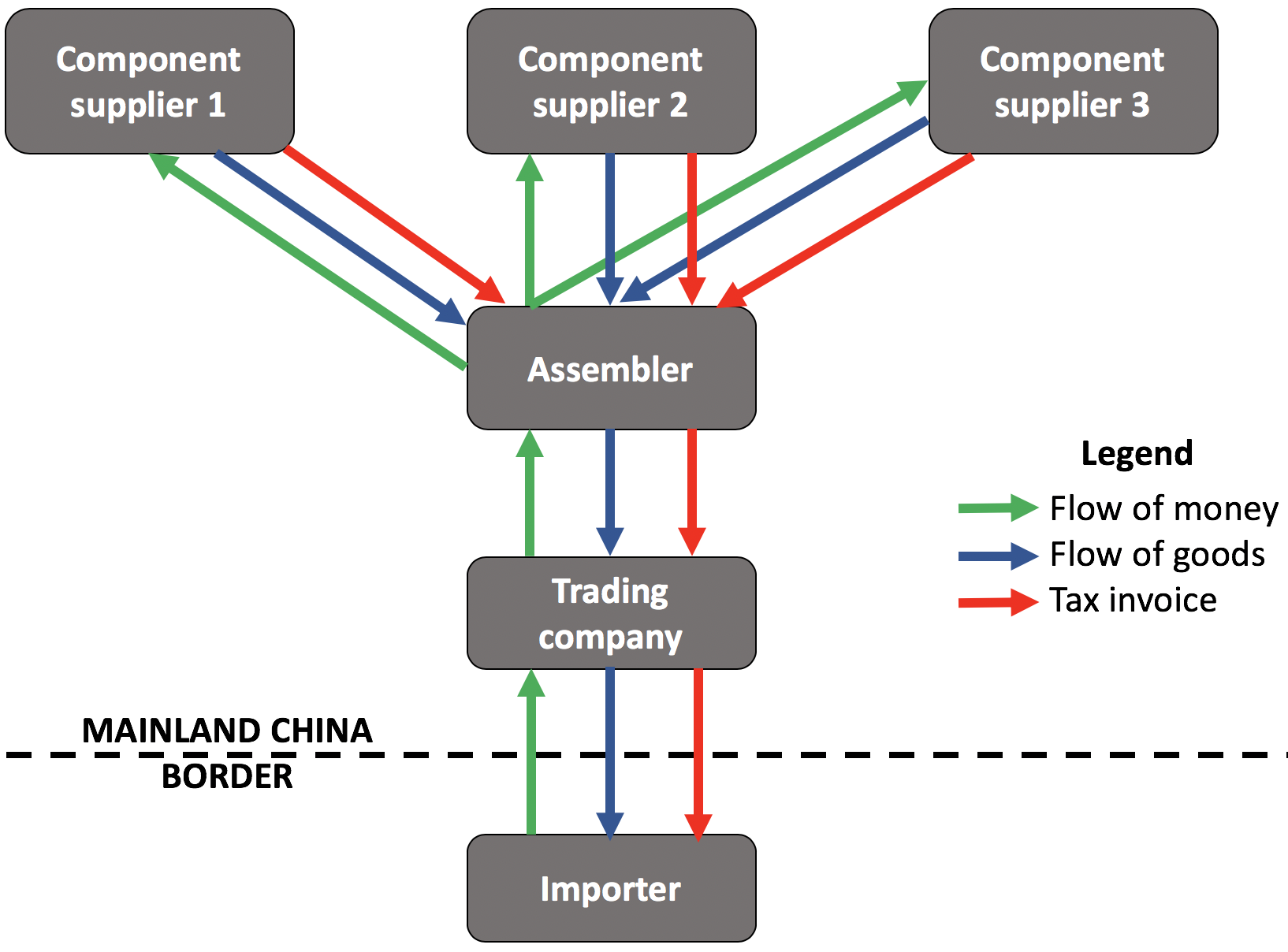
What do we call “the formal way”? It requires that the flows of materials, goods, and tax invoices be aligned, as described below:
Note: if you have about 9 minutes and you prefer to see this as a video, click on this link:
The Formal Way of Purchasing Components
We drew this chart a few years ago in this post about China VAT rebates to explain what the Chinese government wants to see in order to ensure taxes have been paid at every level. It is clearly what the Chinese government wants to enforce more strictly.

Note that the manufacturer does not have to export directly.
This is also common and perfectly acceptable:
Do we know the details of this new policy?
No, we don’t know the modalities of application, whether there will be exceptions, whether some companies will find loopholes and what the risks will be, etc.
For your reference, here is the link to the source of the official Chinese government announcement (in Chinese).
Now, what are the implications?
The manufacturer MUST purchase the components themselves
Until now, when a buyer bought materials directly from component suppliers and had them delivered to their manufacturer for use in their product, it was not “the formal way”, but it was still ‘manageable’. Very soon, that will no longer be manageable. The manufacturer will have to buy components directly from the component suppliers and pay VAT.
Only products made in the formal way can be dropshipped
Some companies have their supplier make products outside of “the formal way” and keep those goods in China until they are ordered and delivered by drop shipment. That is no longer possible. Only products that have been made in “the formal way” can be drop-shipped after 1 Oct. 2025.
Products not made or components not purchased in the formal way should be out of China before October 1st ’25
If you have products that have NOT been made in “the formal way”, or components that have not been purchased in “the formal way”, in mainland China, we strongly suggest you arrange to move them out of mainland China more than 1 week before 1 Oct. 2025. That may involve assembling components, testing & packaging products, which may take time. That needs to be planned ahead.
There could be a rush on shipping
We have no idea how many companies are getting to the same conclusion of “move a lot of products out of mainland China ASAP”. There may be a sudden shipping glut in the week prior to 1 Oct., and warehouses in Hong Kong may suddenly get full. Add to that the unusually long holiday this year (combining the usual October 1st holiday with the Ching Ming festival), and we are worried a lot of shipments may not make their way out of mainland China on time.

