

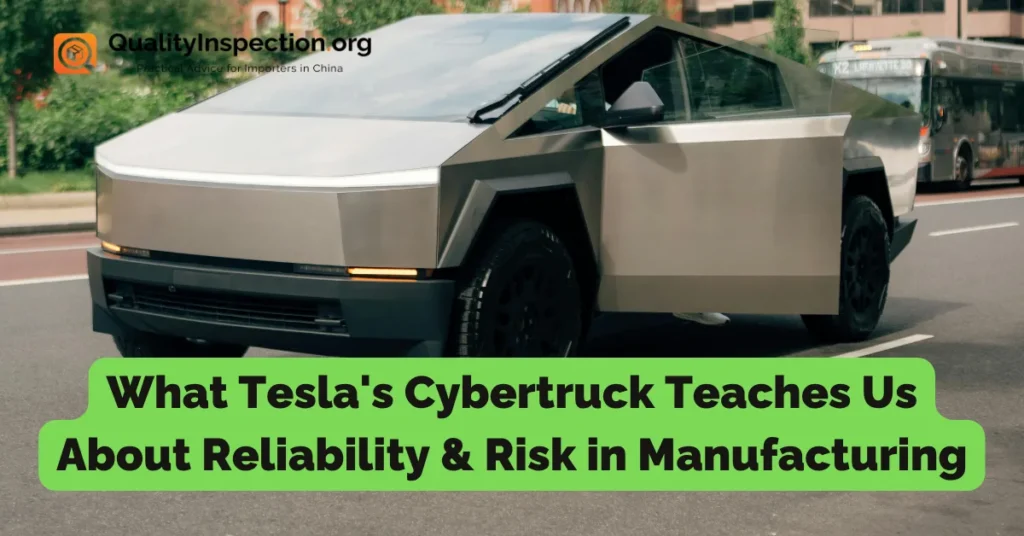
Tesla’s Cybertruck was supposed to redefine the electric vehicle market. Instead, it’s fast becoming a case study in what happens when ambition outpaces execution. From major quality issues to political distractions, Tesla’s latest flagship is now under scrutiny for problems that many manufacturers know all too well. So what can we all learn from this high-profile stumble?
The Cybertruck was announced with bold promises. Futuristic materials, breakthrough performance, and radical design. But under the surface, major cracks are now appearing.
Episode sections
Read some summaries of this episode here:
02:04 – The Cybertruck’s Troubling Launch
Initial deliveries of the Cybertruck have revealed troubling problems: faulty accelerator pedals, cracked windshields, misaligned panels, and problematic wipers. These issues are not only cosmetic but in some cases safety-critical, prompting Tesla to recall tens of thousands of vehicles shortly after launch.
05:38 – Issues with Tesla’s Engineering
Tesla’s engineering team was faced with the enormous challenge of executing a stainless steel exoskeleton, an unorthodox shape, and a host of new features. We discuss how these risks may not have been mitigated with the kind of rigorous testing normally seen in the automotive industry.
09:14 – Financial Fallout from Political Drama
On top of engineering problems, Elon Musk’s public feud with Donald Trump has created waves among investors. The part touches on how CEO behavior can directly influence stock price and public trust, and why brand leadership should tread carefully.
10:36 – The 4-Year Development Timeline. Too Rushed?
Four years may seem like a long development cycle, but for a completely new kind of vehicle, it may not have been enough. Especially if quality assurance gates were missed or compressed, which appears to be the case with Cybertruck. We examine what could have been done differently.
19:40 – Quality Assurance and Gate Reviews
Gate reviews are critical decision points during a product’s development that allow teams to catch issues before they escalate. This section outlines how skipping or downplaying these gates, often to meet aggressive deadlines, can come back to haunt a project.
…and more. Listen to the episode for the rest!
Conclusion
Reliability isn’t an add-on. It needs to be part of the culture from the start. Tesla’s Cybertruck reminds us that even the most hyped innovations will falter if their reliability doesn’t hold up in the real world. For product developers and engineers, the takeaway is clear: test early, test often, and never compromise execution for the sake of speed.
Further reading
- How the Cybertruck Came to Embody Tesla’s Problems (WSJ)
- Cybertruck’s Many Recalls Make It Worse Than 91 Percent of All 2024 Vehicles (Wired)
- I Bought My Dream Car And It SUCKS Here’s Why… Cybertruck Problems (Video)
- Top 5 Reliability Testing Methods for New Products
- HALT vs. HASS – What’s the Difference?
- Design Validation Plan for Reliability Testing
- Why Reliability Testing Is Critical for Electronic Products
- How to Improve Product Reliability Before Launch
- Product Reliability Testing | 7 FAQs
- Why Product Safety, Quality, and Reliability Are Tightly Linked

